
AI powered resume builder script: A practical buyer’s guide to growing WordPress
If you searched for AI powered resume builder script, you are probably looking for more than generic advice. You need a practical way to turn WordPress content into qualified demand. Many businesses publish only when someone has time, so organic traffic remains inconsistent and service pages receive too little internal-link support. An effective commercial content system combines buyer-intent keywords, useful guidance, proof, and a clear path from each article to the relevant service page.
To implement this as a working process, review the relevant EFB service for this goal before selecting tools or templates.
Why this keyword signals buying intent
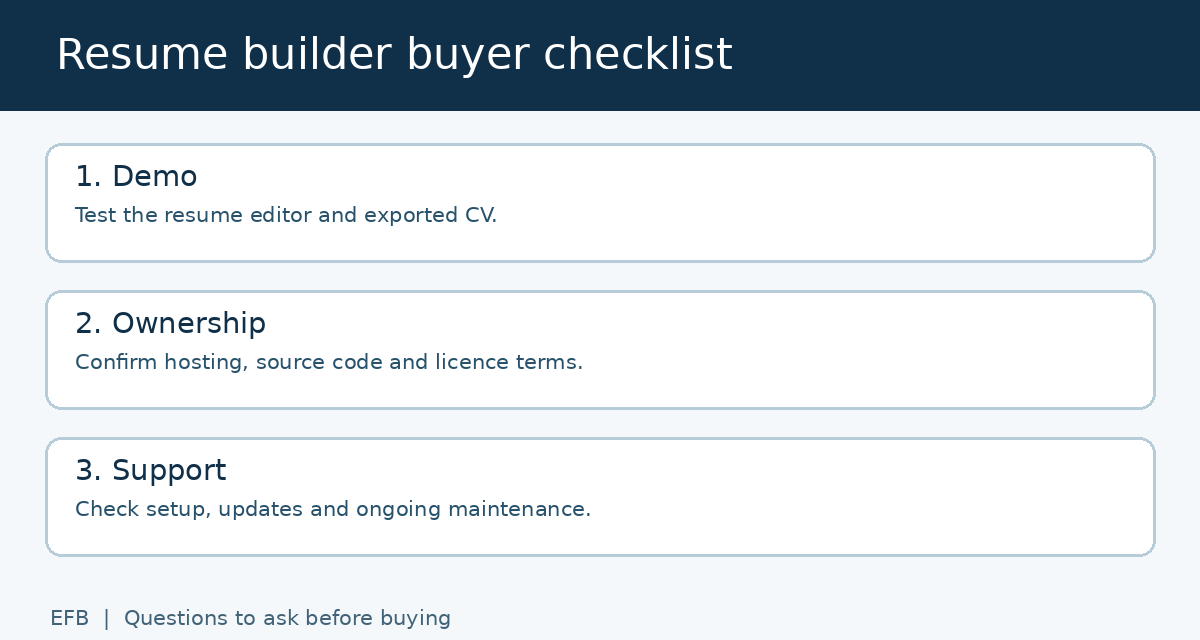
“AI powered resume builder script” is not a casual research phrase. People usually search for it when comparing tools, seeking a workflow they can deploy, or building a case for a purchase.
The article should therefore go beyond definitions. It needs to explain the cost of taking no action, what to consider when choosing a solution, and the fastest way to implement it.
A strong commercial article addresses the practical questions behind the search: What should I use? What should I avoid? What is the next step if I want this solved now?
Practical implementation checklist
1. Start by defining the business outcome: more qualified traffic, consistent publishing, a faster launch, or a clearer service funnel.
2. Review the current search results to find what they fail to address for a WordPress site owner or service business buyer.
3. Choose the format that best matches search intent, such as a checklist, comparison, implementation guide, or launch plan.
4. Add two internal links to the relevant EFB service page. This helps the article drive conversions rather than sit as an isolated blog post.
5. Before publishing, prepare the SEO metadata, categories, tags, featured media, and a FAQ.
6. After launch, track rankings and clicks, then update the article when early signals emerge.
How to evaluate solutions
The right solution should reduce operational work rather than add another dashboard that needs constant attention. Check whether it supports WordPress, multilingual content, SEO metadata, image publishing, and recurring schedules.
For small teams, reliability and clear measurement matter more than a long feature list. The workflow should clearly show what was published, which keyword it targeted, and where readers should go next.
A tool that cannot direct content to a service page or product offer may increase publishing volume without contributing much to revenue.
Common mistakes that reduce ROI
The most common mistake is publishing articles without a CTA. Another is targeting broad informational keywords that attract readers who are not ready to act.
A further mistake is using AI to produce lengthy content with no commercial structure. Length alone will not help if the article fails to address the reader’s pain, present a credible method, and direct them to a relevant next step.
Finally, many teams overlook internal links. Without links from articles to service pages, WordPress content rarely contributes to a measurable sales funnel.
Pre-publish SEO and conversion checklist
Check that the target keyword appears in the title, introduction, one subheading, meta description, image alt text, and at least one FAQ answer.
Add two contextual links to the appropriate EFB service page. Place one near the beginning for readers who already know they need a solution.
End with a short CTA box instead of a vague “contact us” sentence. Tell readers exactly what they will get and where they should click.
Evidence from live websites
EFB draws on working examples such as pchatgpt.net to explain how consistent publishing, internal linking, and SEO refreshes can form a repeatable system instead of a one-off campaign.
The process is straightforward: select a focused keyword, publish a useful article, link it to the right service page, and track its performance. This approach works particularly well for service businesses and sites that sell digital products.
Research for this topic included a review of sources and search result patterns such as GitHub – sahidrajaansari/Ai-Resume-Builder: AI Resume Builder is a web application that he; Final Round Unveils Groundbreaking Interview Coach and Resume Builder Powered by AI; and Kickresume | Best Online Resume & Cover Letter Builder.
How EFB solves this problem
The most relevant EFB service is https://www.efb.net/en/resume-builder-en/. It turns scattered tasks into a repeatable workflow for growth. Rather than treating each blog post as a one-off asset, EFB brings together keyword selection, content structure, publishing, SEO metadata, and conversion-focused CTAs. Each article then becomes a measurable entry point to a service instead of another purely informational page.
FAQ
Do I need an entire content team for AI powered resume builder script?
No. What you need is a repeatable workflow for keyword research, drafting, review, publishing, and performance tracking. EFB can build that system to run daily or weekly.
Is this only for WordPress?
This article covers WordPress because it is the platform most commonly used by service businesses. The same buyer-intent structure also works for landing pages and SaaS sites.
How soon can I expect results?
You may see early signs of indexing and impressions within weeks. Commercial results usually take consistent publishing, strong internal linking, and regular content updates.
Before buying or implementing a solution involving AI powered resume builder script, decide what the business needs to achieve. This could mean generating more enquiries, reducing operational work, improving service-page rankings, or launching a digital product faster. A clear outcome keeps tool selection tied to revenue.
Next, turn each section into a practical decision. Note the risks, the cost of waiting, the resources you will need, and the signals you plan to measure during the first 30 and 90 days.
Small teams should focus on more than publishing additional content. Each piece should lead to a clear service page, such as the relevant EFB service page, so readers know what to do next.
If you already have a WordPress site, review the pages that attract visitors but fail to convert them. Add internal links, use cases, comparison points, and FAQ answers to help buyers decide more quickly.
Automation still needs oversight. Review your keywords, internal links, article performance, and calls to action each month so the workflow supports growth instead of simply publishing more content.
Teams looking for faster results should document their templates, writing tone, image standards, meta descriptions, and FAQ structure. A clear system improves each new article while reducing the need for manual corrections.
When comparing vendors, scripts, or SEO services, request practical examples and a clear delivery scope. Ask what the provider will configure inside WordPress and how they will measure results after launch. The answers will help you distinguish generic articles from implementation plans that can support commercial goals.
Treat the pilot and scale phases separately. Begin with a small group of pages or keywords and monitor the quality of the traffic they attract. Expand once the messaging, internal links, and calls to action perform as expected.
If your budget is limited, focus on the work with the greatest impact. Repair commercial pages first, then improve articles that are closest to generating conversions. After that, create content for buyer searches instead of broad informational queries.
Every commercial article should answer two questions a potential customer may have: Why do I need this now? What happens after I request the service or visit the product page? Clear answers build trust and make the decision easier.
Treat this content as a long-term asset rather than an isolated page in the blog archive. A strong article can be updated, linked to new services, reused in email campaigns, and referenced during sales conversations.
Before publishing, review the headline, slug, images, opening paragraph, internal links, and final CTA on desktop and mobile. Small presentation problems can interrupt the reader’s journey and cost you conversions.
For content with commercial intent, accuracy alone is not enough. Readers need clear steps, practical examples, selection criteria, and a direct route from research to a decision. That is what separates traffic content from content that generates revenue.
The article can also qualify potential customers. Include criteria such as site size, required publishing volume, service type, and expected implementation time. This helps ensure that the next enquiry comes from a buyer who understands the solution and its value.
If the topic relates to a script or digital product, compare ready-made software, custom development, and managed hosting or support. Explaining these options helps decision-makers choose one that fits their budget and technical capacity.
For topics related to SEO or content services, explain how you will choose keywords, build internal links, track rankings, and refresh underperforming articles. Concrete details are more convincing than vague promises about traffic.
A successful commercial article does not need an aggressive sales pitch. Its job is to reduce uncertainty and make the decision easier. Each paragraph should clarify the problem, available options, possible risks, the next step, and why this approach makes sense now.
Review published articles once search data becomes available. If visitors read the content but do not click the service links, revise the CTA, include a stronger example, or place the service link earlier in the article.